Destinations / Patagonia
Carretera Austral Travel Guide: days, ferries, road
The Carretera Austral, or Route 7, runs from Puerto Montt to Villa O'Higgins through rainforest, fjords and glacial lakes. It is a trip of ferries and gravel, so this guide covers how many days to plan, how the crossings work, what to drive, which parks to see and when to go.
Quick answer
Plan at least 10 days from Puerto Montt to Villa O'Higgins, and 14 or more to be comfortable. Most sources advise a 4x4 or all-terrain vehicle, and the Hornopirén ferry must be booked. December to March is the best season, but wind can cancel crossings and roadworks add waits. With five days, do only the north.

How many days to plan
Chile Travel gives the length as more than 1,200 kilometers, GoChile as 1,247 and Swoop Patagonia as 1,200. LaidBack Trip, an itinerary blog with an undated post, lays out 14 days: Chaitén, Pumalín, Puyuhuapi and Queulat, Coyhaique, Cerro Castillo, Puerto Río Tranquilo, Cochrane and Patagonia National Park, then Villa O'Higgins on about day 9 or 10, with the last days left for the way back. Villa O'Higgins has no rental offices, according to the same post, so a one-way trip means paying for a one-way drop-off, if the rental company allows it, or backtracking.
Sources agree on about 1,240 km: Wikivoyage (undated), Passporter (29-04-2026), Sally Sees (07-10-2025) and Worldly Adventurer (updated 13-11-2026) give that figure, and National Geographic (05-07-2019, older than 18 months) gives about 770 miles, the same length in other units. Time varies. Worldly Adventurer puts the drive at 29 to 35 hours from Puerto Montt to Villa O'Higgins, depending on roadworks. Passporter sets a minimum of 10 days, says 14 to 20 is better, and adds that backtracking from Villa O'Higgins to Balmaceda takes two days. National Geographic suggests two weeks, and Sally Sees spent three weeks. Passporter says starting in Hornopirén, 109 km from Puerto Montt, saves about 100 km. Rough Guides (undated) says the final 100 km, from Puerto Yungay to Villa O'Higgins, were finished in 2000.
The road ends at Puerto Bahamondes, 7 kilometers beyond Villa O'Higgins, per LaidBack Trip. For a longer southern trip, our Torres del Paine guide covers the other end of Patagonia, and our Chile itinerary shows where the Carretera Austral fits in a bigger plan.
Getting there and getting around
Chile Travel names two airports, El Tepual in Puerto Montt and Balmaceda in Coyhaique, both with direct flights from Santiago. Swoop Patagonia puts Balmaceda about 2.5 hours from Santiago and Puerto Montt to Balmaceda at just over one hour. That suggests an open-jaw trip for the northern section: start in Puerto Montt, drive to Coyhaique and fly out of Balmaceda. Passporter says many rental firms allow one-way drop-off at points south, and Sally Sees paid a one-way fee, which it calls reasonable, for a pickup in Punta Arenas and a drop-off in Puerto Varas. Ask your company before you book.
- Rental car: GoChile says you can rent in Coyhaique or at Balmaceda airport and advises booking early. LaidBack Trip says rental companies need at least 14 days to arrange a cross-border permit. Swoop adds that taking a hire car to Argentina needs an international permit and insurance for both countries.
- Buses: GoChile says regular services run from Coyhaique to most towns, with terminals in Coyhaique, Cochrane and Chile Chico. Swoop lists Coyhaique to Cochrane at 7 to 10 hours. We found no through bus from Puerto Montt to Villa O'Higgins and no current timetables.
- Fuel: GoChile lists stations in Puerto Montt, Hornopirén, Futaleufú, Puyuhuapi, Coyhaique, Puerto Río Tranquilo, Cochrane and Villa O'Higgins, among others, and recommends carrying a spare canister. Chile Travel says there is no mobile signal or electricity inside Pumalín, so refuel in Hornopirén or Chaitén first.
- Fuel and cash, updated list: Worldly Adventurer (13-11-2026) lists stations at Hornopirén, Chaitén, Futaleufú, La Junta, Puyuhuapi (diesel only), Puerto Cisnes, Manihuales, Puerto Aysén, Puerto Chacabuco, Coyhaique, Puerto Río Tranquilo, Chile Chico, Cochrane, Villa Cerro Castillo and Villa O'Higgins, and ATMs at Chaitén, Futaleufú, Coyhaique, Chile Chico, Cochrane and Villa Cerro Castillo. Passporter says some towns do not accept cards. Wikivoyage (undated, with prices from 2015 to 2017) says the only ATM was in Coyhaique, so the newer list contradicts it. Carry cash and a spare fuel can.
- Bus fares: Worldly Adventurer (page updated 13-11-2026, individual fares undated) lists Kemelbus from Puerto Montt to Chaitén at CLP 20,000 in 10 hours, Buses Becker from Coyhaique to Chaitén on Tuesday and Saturday at 08:00 for CLP 24,000 in 9 hours, and Puyuhuapi to Chaitén for CLP 6,000 in 3 hours. Wikivoyage says connections between towns can run only weekly. Confirm each leg at the terminal.
- Signal, supplies and driving: Passporter says some areas have no signal, so download offline maps, and advises against driving at night. National Geographic (2019) advises stocking up in Puerto Montt on food, repellent, sunscreen and cash. Passporter's packing list includes spare tires, an extra fuel can, a tow strap, a headlamp and water.
The ferries
The road is broken by ferries. The most important is the Hornopirén to Caleta Gonzalo crossing, run by Somarco. Its own site shows a sea leg of about 3 hours 30 minutes to Leptepu, a 15-minute drive and a final 45-minute leg, and states that it is high season from September to April. Chile Travel's Pumalín page says advance ferry booking is mandatory, while Sally Sees says the Puelche crossing needs no reservation, so book the long one and check the short one.
| Crossing | Duration | Cost and booking | Source date |
|---|---|---|---|
| La Arena to Puelche (Transportes del Estuario) | About 30 minutes, every 30 to 60 minutes | CLP 11,130 per car, passengers free, no reservation | Sally Sees, 07-10-2025 |
| Hornopirén to Caleta Gonzalo (Somarco) | About 4.5 hours: 3 h 30 min at sea, a 15-minute road stretch of 10 km and 45 minutes at sea | Subsidized route, non-resident: car or pickup 72,650, 12,100 for each passenger besides the driver, bicycle with rider 8,050. Commercial route: car 81,900, passenger 15,750 including the driver, bicycle 12,600, and from 1 to 28 February car 103,950, passenger 19,950 and bicycle 19,950. Printed with a dollar sign and no currency code. Sally Sees reported lower figures in 2025 (CLP 69,500 and 11,600). Booking required | Somarco, tables posted as images in 2026, read 17-11-2026. Sally Sees, 07-10-2025 |
| Puerto Yungay to Río Bravo | 45 to 60 minutes | Free, no reservation. Four crossings a day April to September, eight October to December, ten January to March | Sally Sees, 07-10-2025. Timetables are on Facebook, not read |
Somarco's own subsidized route lists daily sailings from Hornopirén at 10:00 and 18:00 and from Caleta Gonzalo at 12:30 and 20:00, which matches Sally Sees. A second table shows only 10:00 and 12:30, and we could not tell which season it is for. A separate commercial service runs on demand from 11 January 2026: the first leg leaves Hornopirén at 01:30, and the first leg from the other side, Caleta Gonzalo to Fiordo Largo, leaves at 03:30. We found no instructions on how to request it. The sites label fares "non-resident", and we could not confirm what a foreigner pays on Somarco. The page said the bimodal route was operating normally. The tables are images, posted in January and September 2026, and we could not tell which is current, so confirm both fares and dates with Somarco. A free ferry does not mean a quick one: a travel diary posted in May 2024, which is older than 18 months, reports arriving at Puerto Yungay with the next boat two to three hours away. Patagonia Scout (updated August 2026) says wind is the main cause of cancellations, especially on Hornopirén and Puerto Yungay, and advises building a buffer day per ferry. Patagonia Scout, an unofficial guide, is also our only source for the temperatures in the best-time answer.
The south can also be reached by ferry. Sally Sees (07-10-2025) took the TABSA vehicle ferry from Puerto Natales to Puerto Yungay, which it describes as a three-day journey, and drove north from Villa O'Higgins. We did not confirm current TABSA schedules or fares.
Naviera Austral
Naviera Austral's own pages, read on 17-11-2026, list two longer routes. Fares are one way and exclude the boarding fee, and the pages print a dollar sign with no currency code. The news page showed no change notices.
| Route | Sailings | Fares |
|---|---|---|
| Puerto Montt to Chaitén, about 9 hours, ship Agios | From Puerto Montt Monday 12:00 and Tuesday to Saturday 23:00. From Chaitén Monday 01:00 and 23:00, Wednesday to Saturday 11:00. The Tuesday, Thursday and Friday sailings are subsidized | Commercial, non-resident: passenger from 35,000, small vehicle from 168,000, bicycle from 30,000. Foreign: from 43,300, 210,000 and 39,400. Subsidized, non-resident, full leg: passenger 19,200, small vehicle 126,470, bicycle 11,310. We could not confirm the foreign fare on subsidized sailings |
| Quellón to Puerto Chacabuco, about 28 hours, ship Queulat | From Quellón Wednesday and Saturday 23:00. From Puerto Chacabuco Monday 18:00 and Friday 12:00 | Passenger: Chilean 23,650, foreign 47,300 |
Road conditions and paving
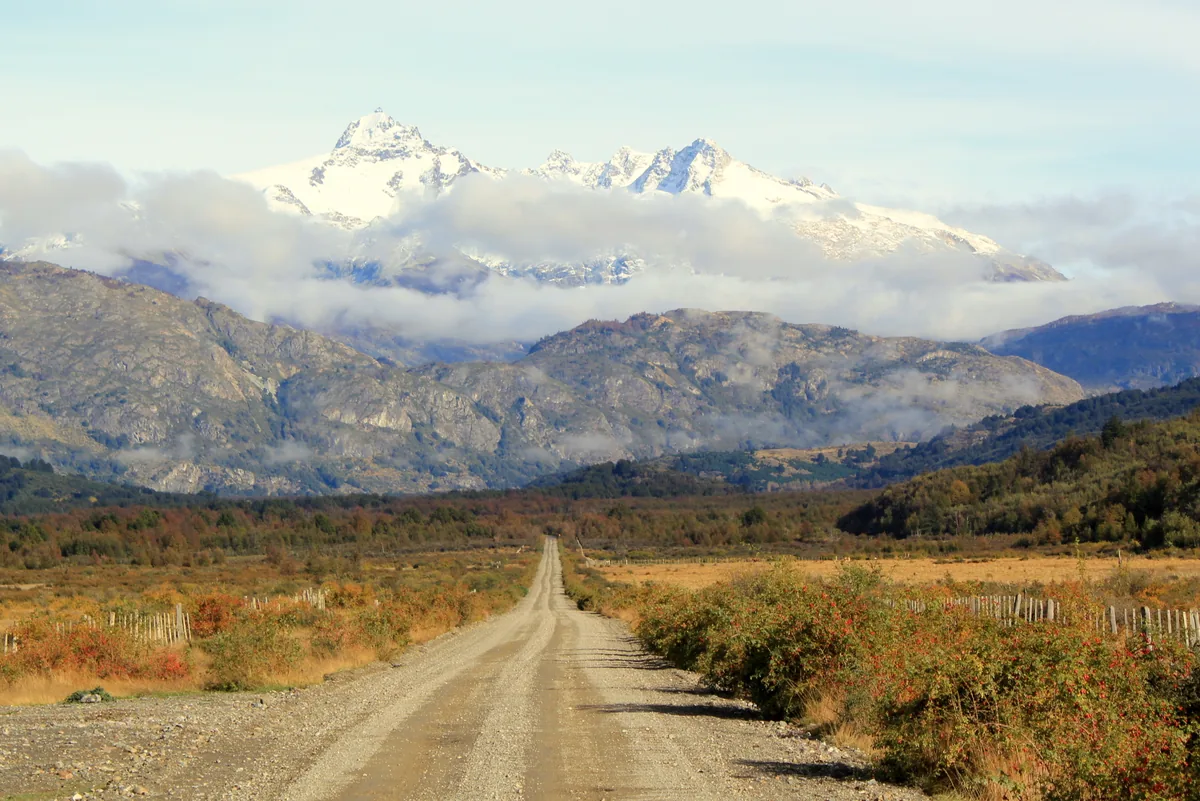
Figures differ. Emol reported on 23-05-2026 that 614.5 of about 1,058 kilometers, or 58%, have been paved since 1995 under agreements between the Ministry of Public Works and the Aysén regional government, with 443.5 kilometers left. The same article describes a 2026 to 2030 plan that covers 244 kilometers of gravel on the 658-kilometer corridor between the regional limit and Lago Juncal. GoChile, undated, says only 12% is paved and cites Sernatur. LaidBack Trip, undated, says about half was paved at its visit, mostly between Puerto Montt and Villa Cerro Castillo, with works toward Puerto Río Tranquilo.
LaidBack Trip puts most of the gravel south of Cerro Castillo, and Emol does not explain the gap between the 443.5 kilometers it says are unpaved and the 244 kilometers of the plan. Ask locally about closures and works, because we found no official real-time road report. One 2026 traveler recommends the Facebook group "MOP Aysen" for news of closures.
Roadworks: Worldly Adventurer (updated 13-11-2026) says paving works continue until 2028, with flaggers or traffic lights and waits of up to 20 minutes at the Queulat pass, on both sides of Coyhaique and west of Villa Cerro Castillo. It says the road closes from 13:00 to 17:00 between the Bahía Murta turnoff and Puente El Belga, north of Puerto Río Tranquilo, until March 2027, and that Ruta 265 between El Maitén and Puerto Guadal has the same closure hours until June 2027. That is one source and the dates may change, so ask locally. Passporter adds that you cannot drive fast on the gravel.
Parks and hours
The official ticket site, Pases Parques, sells tickets online for Queulat, Laguna San Rafael and Patagonia National Park. On 17-11-2026, for a 28-11-2026 visit, it showed CLP 12,000 for a foreign adult at Queulat and Laguna San Rafael and CLP 11,400 at Patagonia. Chilean adults pay CLP 5,500, 5,500 and 5,200. Ages 13 to 17 pay CLP 6,000, 6,000 and 5,700 as foreigners, children up to 12 pay CLP 0, and a foreign senior pays the adult rate. Pumalín Douglas Tompkins and Cerro Castillo are not on the site, so we have no price for them. Online tickets have no cancellations or refunds.
| Park | Hours and last entry | Notes |
|---|---|---|
| Queulat (foreign adult CLP 12,000) | Tuesday to Sunday, 09:00 to 16:30, last entry 14:30 | Pases Parques showed the Ventisquero Colgante camping as open on 17-11-2026, while an earlier notice on the same site said it was closed from 17-04-2026 until further notice. Confirm before you go |
| Laguna San Rafael (foreign adult CLP 12,000) | Every day, 08:30 to 17:00, last entry 13:00 | Reached by boat, not by the road: LaidBack Trip describes a full-day guided tour from Puerto Chacabuco. The Explorers glacier tour is no longer possible for safety reasons |
| Patagonia, Chacabuco sector (foreign adult CLP 11,400) | Tuesday to Sunday, 08:30 to 18:00, last entry 17:30 | Register at the visitor center, about 28 km north of Cochrane |
| Pumalín Douglas Tompkins | CONAF, consulted 17-11-2026: office at El Amarillo every day, 08:30 to 13:00 and 14:00 to 17:30. Trail entry only until 14:00 | Camping at Caleta Gonzalo, Volcán, Cascada Escondida, Lago Blanco, Lago Negro, Camping Grande and Ventisquero, $6,000 per person per night, printed with no currency code, first come first served with no reservations. We found no entry price, as CONAF's page, modified 21-07-2026, and Pases Parques give none, and the CONAF page lists no refuges. A private operator, Lodge Caleta Gonzalo, rents cabins and domes, and its own campsite is listed at $18,000 per adult at peak, described below |
| Cerro Castillo (Aysén) | Not on Pases Parques. CONAF's page gives no hours or entry price | The Laguna Castillo and Horquetas trails need a certified guide, the Estero Parada trail has been closed to unguided visitors since 29-05-2026, and the Laguna Chiguay camping is not operating |
The ticket pages are undated, so reconfirm them before you go. The ferry schedule and the 14:00 trail cut-off interact: the 10:00 sailing from Hornopirén takes about 4.5 hours, so by our arithmetic it arrives around 14:30. If the 14:00 trail cut-off also applies at Caleta Gonzalo, which the CONAF page does not say, the trails do not fit on the arrival day, and a 2026 traveler says the 10:00 sailing sells out first.
Cabins and camping at Caleta Gonzalo: Lodge Caleta Gonzalo
Lodge Caleta Gonzalo, a private company, publishes lodging prices per night on its own site, modified 22-10-2026. We saw them on 18-11-2026 for the booking system's default date of that day, without making a reservation, so they are not quotes and the rates for the peak months may differ. They are printed with a dollar sign and no currency code, which we read as pesos because payment is by Webpay or transfer. Breakfast is not included, and booking is online or by email at reservas@lodgecaletagonzalo.cl. The site shows foreign guests a price about 4% lower than Chilean guests and does not say who counts as a foreign guest, the reverse of the park and ferry fares above. The capacities in brackets are as printed, and the page gives a price per night without saying whether it is per cabin.
| Lodging | Foreign guests, per night (printed $, read as pesos) | Chilean guests, per night (printed $, read as pesos) |
|---|---|---|
| Cabaña Exploradores (2 to 3 people) | $259,000 | $269,000 |
| Cabaña Alerce (2 to 3 people) | $249,000 | $259,000 |
| The Owner's Suite (up to 4) | $279,000 | $290,000 |
| Small cabins Pudu, Nutria, Chucao and Cisne (2 to 3), Villa Hobbit (4), Orca (2 to 4) | $225,000 | $234,000 |
| Puma (2) and Tonina (2 to 3) | $215,000 | $224,000 |
| Colonos (2) | $199,000 | $207,000 |
| Domos Refugio (1 to 2) | $119,000 | $125,000 |
The lodge's own Río Gonzalo campsite is listed at $6,000 to $10,000 per night, with the unit not stated, and at peak, from 15 December 2026 to 15 March 2027, at $18,000 per adult, $12,000 per child up to 10 and $14,000 per senior aged 65 and over per night, with a maximum stay of 3 nights. These dates are the lodge's own and differ from Somarco's September to April high season. CONAF lists the Caleta Gonzalo river campsite at $6,000 per person per night with no reservations, and we could not tell whether these are the same site, nor whether the lodge's campsite needs a reservation. The Pumalín foundation's own site, pumalinparque.cl, did not open for us, so we have no entry price from it.
Sights and side trips
These come from guides of different ages, so treat them as leads and not as a schedule. National Geographic is from 2019, and Rough Guides is undated and mentions a road planned for 2013, so its details predate 2014 and should be checked.
- Chaitén volcano. Rough Guides (undated) says it erupted on 2 May 2008 and that the wrecked houses on Calle Río Blanco are kept as a museum. National Geographic (2019) describes a 3-mile round-trip hike to the dome.
- Puyuhuapi. National Geographic says it is about 25 minutes beyond Queulat and has thermal springs. Rough Guides says to phone ahead to book Termas de Puyuhuapi, with three outdoor pools.
- Futaleufú. Worldly Adventurer says it is not officially on the road. It puts the drive from Villa Santa Lucía at 150 km and 3.5 hours, half-day rafting from CLP 45,000 and buses from Chaitén at CLP 2,500. Rough Guides says 80 km from Villa Santa Lucía, so the sources disagree. Paso Futaleufú, 10 km east of town, is listed as open 08:00 to 21:00 daily.
- Cerro Castillo. National Geographic calls its hike strenuous. See the guide rules in the parks table.
- Puerto Río Tranquilo and the Marble Caves. National Geographic says to stay at least two days and kayak to the marble chapels or visit the Exploradores glacier. Passporter also reaches the caves by kayak. We read no current price.
- Valle Chacabuco, Cochrane and Tamango. National Geographic puts Valle Chacabuco 2.5 hours south of Puerto Río Tranquilo, with a 14-mile Lagunas Altas trail. Sally Sees describes the Los Carpinteros trail at Tamango and says huemul sightings are common there.
- Caleta Tortel. Rough Guides and Sally Sees describe a village of boardwalks, and Sally Sees says no cars are allowed in it. From Villa O'Higgins it gives about 4 hours and 142 km, plus a ferry of about an hour, and advises organizing the Isla de los Muertos tour in advance.
- Villa O'Higgins. Rough Guides says it could be reached only by small plane or by boat from Argentina until 1999, and puts the end of the road 7 km away at Bahía Bahamóndez, which LaidBack Trip spells Bahamondes.
- Alerce Andino. Rough Guides places this national park about 40 km from Puerto Montt, with a ranger station and camping.
A five-day plan for the north
This is our own ordering, built from the ferry and park times above and from LaidBack Trip's stops, not a source itinerary. Driving times between towns are not confirmed here, so allow slack. Queulat and Patagonia National Park are closed on Mondays, so shift the days if day 4 falls on one.
- Day 1: Puerto Montt to Hornopirén, about 3 hours 45 minutes by road according to Somarco, and sleep there.
- Day 2: morning ferry to Caleta Gonzalo and on toward Chaitén.
- Day 3: Pumalín south sector in the morning, with the El Amarillo trail 60 kilometers south of Chaitén, then continue toward Puyuhuapi.
- Day 4: Queulat before the 14:30 last entry, then Coyhaique.
- Day 5: fly out of Balmaceda, or keep going south toward Cerro Castillo and the lakes.
The next stretch in LaidBack Trip's plan is Cerro Castillo, the Marble Caves at Puerto Río Tranquilo, Cochrane, Patagonia National Park and Villa O'Higgins. Allow about five more days for it, going by that plan's days 5 to 9. North of the route, our Puerto Varas guide and our Chiloé guide cover the usual gateway.
When to go
Chile Travel says December to March. Patagonia Scout (updated 04-08-2026) gives 13 to 20 degrees Celsius and more than 15 hours of daylight in December, with high crowds from December to February, 8 to 14 degrees and low crowds in October and November, and minus 2 to 7 degrees with heavy rain or snow from May to September. It also says the north, around Chaitén and Puyuhuapi, is the rainiest, with annual rainfall often above 3,000 millimeters, and that the south from Cochrane to Villa O'Higgins is the windiest. See also our entry requirements guide before you book.
Season sources differ. National Geographic (2019) and Passporter both say November to March, and Passporter advises against autumn and winter, while Rough Guides says services drop off outside summer. For insects, National Geographic advises repellent against mosquitoes and horseflies, and Wikivoyage (undated) says the horseflies disappear at the end of January.
Sample hotel prices on the Carretera Austral (Booking.com, 17-11-2026)
We searched Booking.com for one night, 28 to 29 November 2026, two adults, with the currency set to CLP. Most cards show taxes and fees as a separate amount, shown here after the plus sign. "Not listed" means the card did not mention breakfast, which does not confirm it is excluded. Each row is the first result of a filter, not a recommendation: low is the first result rated 8.0 or higher sorted by lowest price, mid the first 3★, and high the first 4★ or 5★. Booking's guest score is in brackets. We searched on 17-11-2026 between 23:29 and 23:30.
| Town | Level | Lodging (Booking score) | CLP per night | Breakfast |
|---|---|---|---|---|
| Coyhaique | Low | Hospedaje de la Abu, double with two beds (8.9) | 36,750 + 6,983 | Not listed |
| Coyhaique | Mid | Hostal Casa Arrayán, 3★ (8.8) | 64,752 + 12,303 | Yes |
| Coyhaique | High | NÓMADES Hotel Boutique, superior double (9.0) | 258,012 + 49,022 | In the room |
| Puyuhuapi | Low | cabañas mateo 02 nuevo, two-bedroom house (8.9) | 70,000 + 13,300 | Not listed |
| Puyuhuapi | Mid | cabañas mateo 01, two-bedroom house (8.5) | 75,000 + 14,250 | Not listed |
| Puyuhuapi | High | No 4★ or 5★ result | None | None |
| Chaitén | Low | VERDEAGUA Hostal, double with shared bathroom (8.5) | 56,000, taxes included | Not listed |
| Chaitén | Mid | Cabañas Atardecer Fandango, one-bedroom apartment (8.9) | 65,000 + 12,350 | Not listed |
| Chaitén | High | Chucao Bosque y Cabañas, one-bedroom chalet (8.4) | 69,733, taxes included | Not listed |
For 16 to 17 January 2027, searched on 18-11-2026 at 06:13: Hostal Casa Arrayán in Coyhaique was 66,744 + 12,681 with breakfast. In Puyuhuapi the mid-range cabins did not appear, and the first 3★ was Cabañas Uenke, a one-bedroom apartment, at 45,000 + 8,550, breakfast not listed. In Chaitén the first 3★ was Hostal La Minga, a double with private bathroom, at 94,837 + 18,019 with breakfast. Those two are different lodgings from November, so the figures are not a like-for-like comparison, and the lower Puyuhuapi price is not a price drop. Prices move with dates and availability.
Crossing to Argentina
Two guides describe the hard crossing from Villa O'Higgins to El Chaltén, and neither gives a current price or timetable. National Geographic (2019, older than 18 months) says you cross Lake O'Higgins by boat, walk to Laguna del Desierto and take a bus on, and that drivers must turn back north. Rough Guides (undated, with an outdated mention of a road planned for 2013) says the boat leaves Bahía Bahamóndez at 08:30, you get your passport stamped at Chilean control, you ford a river and walk 7.5 km to the Argentine post, boats depend on the weather and you should carry several days of food. Wikivoyage (undated) says the crossing takes about two days, that many people cross at Chile Chico instead, and that fruit, vegetables, cheese, meat and honey are confiscated at the border. For a rental car, LaidBack Trip says the company needs at least 14 days to arrange the permit. Check boat schedules and border rules before you commit.
What travelers say
We read five first-person accounts, dated from May 2024 to March 2026. None is a forum post, so treat them as leads, not as consensus, and read the two older ones as background.
- Expect waits at the free ferry. A travel diary from May 2024, which is older than 18 months, describes arriving at Puerto Yungay two to three hours before the next boat, catching the second to last crossing that day, and finding the small shop closed.
- Ferries and weather rewrite the schedule. A cycling blog post dated 04-03-2026 reports a ferry leaving about four hours late because of "unexpected tides", another ferry missed after a rushed 10 km ride, a tent flooded in heavy rain and a border crossing at Villa O'Higgins brought forward to 05:00 to get ahead of a storm.
- Cold mornings, rain and gravel. A cyclist who rode from Puerto Varas to Coyhaique in February 2025, about 21 months ago and so older than 18 months (the post has no publication date) reports lows of about 4 to 7 °C at night and in the morning, afternoons above 20 °C and two rainy days. Roughly half of about 1,000 km was gravel, and food and lodging options were few. He rented the bike in Puerto Varas and returned to Coyhaique by bus.
- Book the long ferry, and expect mixed roads. A blog post dated 25-03-2026 about a three-week motorhome trip in January and February 2026 says the Hornopirén to Caleta Gonzalo crossing, with two ferries, took about 6 hours and was the only one they had to book ahead, with weeks of waiting even late in the season. The La Arena to Puelche ferry took 35 minutes. The road was asphalt to Puerto Río Tranquilo and then gravel, compacted mud and corrugations, with closures for roadworks. Heavy rain at Queulat meant no view of the hanging glacier, and camping cost CLP 12,000 per person per night at Futaleufú and CLP 10,000 near Queulat.
- Spare days and the road-closure group. A post dated 25-01-2026 says the La Arena to Puelche ferry needs no booking and runs every 45 minutes, while the Hornopirén one must be booked and the 10:00 sailing sells out first. The gravel south of Caleta Gonzalo was well maintained for the SUV they rented, they left free days for bad weather, and the author recommends the Facebook group "MOP Aysen" for news of road closures. A cabin at Alerce Andino was CLP 8,200 per person.
Frequently asked questions
How many days do you need for the Carretera Austral?
A 14-day plan from LaidBack Trip reaches Villa O'Higgins on about day 9 or 10 and uses the rest for the return. We read that as roughly 10 days one way, more if you want hikes and weather margin. With five days, do the northern section as far as Coyhaique.
Do you need a 4x4 for the Carretera Austral?
Sources disagree. Passporter (29-04-2026) says a 4x4 is highly recommended, while Wikivoyage (undated) says 4WD is not needed. Chile Travel recommends an all-terrain vehicle because of the gravel sections, GoChile recommends a 4x4 all year, Patagonia Scout (August 2026) calls 4WD highly recommended and 2WD possible in mid-summer, and LaidBack Trip says a 2WD is usually fine. Patagonia Scout adds that winter sections near Cerro Castillo can be impassable without 4WD and chains.
How do the ferries work?
Three crossings matter most. La Arena to Puelche takes about 30 minutes, Hornopirén to Caleta Gonzalo takes about 4.5 hours on Somarco's own legs, plus waiting, and must be booked (Somarco's own site listed a subsidized car fare of 72,650 on 17-11-2026, printed with a dollar sign), and Puerto Yungay to Río Bravo is free and first come, first served, according to a guide of October 2025. Wind can cancel crossings, notably Hornopirén and Puerto Yungay, so keep a buffer day. Naviera Austral's overnight ship from Puerto Montt to Chaitén, about 9 hours, is the alternative to the Hornopirén crossing.
Can you do the Carretera Austral without a car?
Partly. GoChile says buses run from Coyhaique to most towns. We found no through service from Puerto Montt to Villa O'Higgins and no current timetables, so confirm each leg at the terminals. A rental car gives far more freedom.
What is the best time to drive the Carretera Austral?
Chile Travel says December to March. Patagonia Scout gives 13 to 20 degrees Celsius from December to February and 8 to 14 in October and November, with very few visitors and high rain or snow from May to September. The north is the wettest and the far south the windiest.
How much of the Carretera Austral is paved?
A May 2026 Emol report, citing the Ministry of Public Works and the Aysén regional government, says 614.5 of about 1,058 kilometers (58%) are paved, with a 2026 to 2030 plan to pave more. GoChile, undated, cites 12%, so check current conditions before you drive.
Where can you sleep at Caleta Gonzalo and Pumalín?
CONAF lists campsites at $6,000 per person per night, first come, first served, with no reservations, and no refuges. Lodge Caleta Gonzalo, a private company, listed cabins from $199,000 to $279,000 per night and domes at $119,000 for foreign guests on 18-11-2026, printed with a dollar sign and no currency code and for a default date, so they are not quotes. Its own campsite is listed at $18,000 per adult at peak, from 15 December 2026 to 15 March 2027.
Are there ATMs and fuel stations on the Carretera Austral?
Yes, but not everywhere. Worldly Adventurer (updated 13-11-2026) lists ATMs at Chaitén, Futaleufú, Coyhaique, Chile Chico, Cochrane and Villa Cerro Castillo, and fuel from Hornopirén to Villa O'Higgins, with the Puyuhuapi station diesel only. Passporter says some towns do not accept cards, and Wikivoyage (undated, with prices from 2015 to 2017) says the only ATM was in Coyhaique, which the newer list contradicts. Carry cash and a spare fuel can.
Are there roadworks on the Carretera Austral?
Yes. Worldly Adventurer (updated 13-11-2026) says paving works continue until 2028, with waits of up to 20 minutes at the Queulat pass, around Coyhaique and west of Villa Cerro Castillo, and a closure from 13:00 to 17:00 north of Puerto Río Tranquilo until March 2027. It is one source, so ask locally before you drive.
Can you cross to Argentina from the Carretera Austral?
Yes, by several routes. From Villa O'Higgins you cross Lake O'Higgins by boat and walk to El Chaltén (National Geographic, 2019, and Rough Guides, undated, with no current prices), Paso Futaleufú is listed as open 08:00 to 21:00 (Worldly Adventurer), and Wikivoyage says many people cross at Chile Chico. Drivers need a cross-border permit for a rental car, arranged at least 14 days ahead according to LaidBack Trip.
Sources and notes
This guide is informational. Prices, hours and schedules change, so confirm them with the official sources before you travel. Last checked November 2026. On 23-11-2026 we read Sally Sees (about a third) and Worldly Adventurer (about 28%) only in part, so we use only what was read verbatim, and the Worldly Adventurer page is the only source we read with roadworks dated November 2026. Read how we verify information in our editorial policy.
- Rough Guides: Patagonia (undated)
- Worldly Adventurer: planning the Carretera Austral (updated 13-11-2026, read in part)
- Sally Sees: three-week Carretera Austral itinerary (07-10-2025, read in part)
- Passporter: organize a road trip along the Carretera Austral (29-04-2026)
- Wikivoyage: Carretera Austral (undated, prices from 2015 to 2017)
- National Geographic: the perfect Patagonia road trip (05-07-2019, older than 18 months)
- Chile Travel: Carretera Austral (updated 09-01-2026)
- Chile Travel: Pumalín Douglas Tompkins National Park (updated 23-10-2026)
- Somarco: Hornopirén to Caleta Gonzalo route information (consulted 17-11-2026, Spanish)
- Pases Parques: Queulat National Park (consulted 17-11-2026)
- Pases Parques: Laguna San Rafael National Park (consulted 17-11-2026)
- Pases Parques: Patagonia National Park, Chacabuco sector (consulted 17-11-2026)
- Emol: paving of the Carretera Austral (23-05-2026, Spanish)
- Sally Sees: Carretera Austral ferries guide (07-10-2025)
- Patagonia Scout: Carretera Austral weather by month (updated 04-08-2026)
- GoChile: guide to traveling the Carretera Austral (undated)
- Swoop Patagonia: getting to and around Aysén (undated)
- LaidBack Trip: 14-day Carretera Austral itinerary (undated)
- Travel diary: the last ferry crossing (11-05-2024)
- Camol Cycles on Substack: The Carretera Austral (04-03-2026)
- Cycle Big Love: Patagonia 2025 (trip in February 2025, undated post)
- Naviera Austral: Puerto Montt to Chaitén (consulted 17-11-2026, Spanish)
- Naviera Austral: Ruta Cordillera, Quellón to Puerto Chacabuco (consulted 17-11-2026, Spanish)
- CONAF: Pumalín Douglas Tompkins National Park (modified 21-07-2026, consulted 17 and 18-11-2026, Spanish)
- CONAF: Cerro Castillo National Park (consulted 17-11-2026, Spanish)
- Booking.com: Coyhaique, Puyuhuapi and Chaitén search results (consulted 17 and 18-11-2026, Spanish interface)
- Bob and June: the Carretera Austral, January and February 2026 (25-03-2026)
- Medium: The Carretera Austral (25-01-2026)
- Lodge Caleta Gonzalo: lodging (modified 22-10-2026, seen 18-11-2026, Spanish)