Plan your trip / Money
Money in Chile: cash, cards, ATMs and tipping
What to carry, how to pay and what it costs to get cash out. This guide covers the peso, cards, ATM fees, exchanging money, VAT at hotels and tipping, with the figures and dates we could confirm.
Quick answer
Money in Chile means the Chilean peso (CLP). Cards and contactless payments work in most cities, but carry some cash for small towns, markets and Patagonia. Foreign cards pay about CLP 3,000 to 9,200 per ATM withdrawal, usually capped at CLP 200,000. A 10 percent restaurant tip is suggested and voluntary.
What currency does Chile use?
Chile uses the Chilean peso, written CLP and shown with the $ sign, with no decimals. Chile's tourism board lists banknotes of 1,000, 2,000, 5,000, 10,000 and 20,000 pesos and coins of 10, 50, 100 and 500 pesos. Keep the $ sign in mind when you read prices: in Chile $5,000 means five thousand pesos, not dollars.
The exchange rate moves every day. The Central Bank of Chile publishes an official daily rate, the dólar observado. News sites quoted CLP 911.77 per US dollar on 10-08-2026 and CLP 967.79 on 07-10-2026. At those two rates a CLP 20,000 banknote is worth about US$21 to US$22. Use the Central Bank figure or your bank's rate on the day you travel, because the rate at an exchange house or shop can differ.
Cash or card?
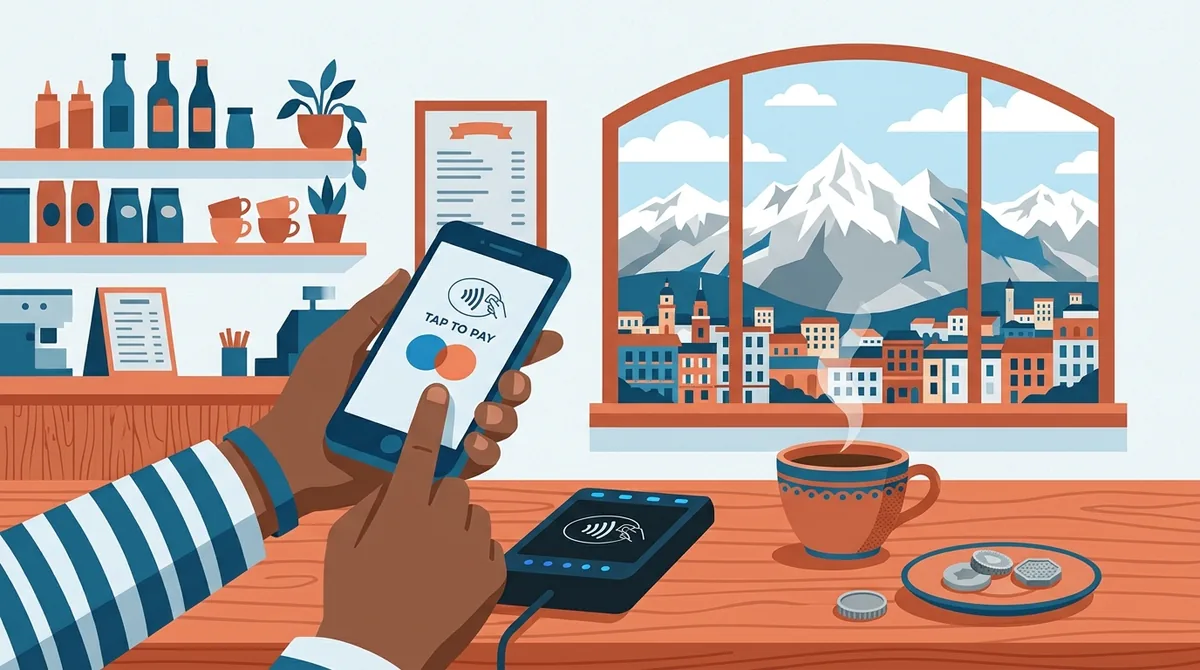
Carry both. Most guides agree that cards are widely accepted in Santiago and other cities, that Visa and Mastercard are the most common, and that contactless payment is standard in Santiago, Valparaíso and Viña del Mar. Cash matters more in small towns, markets, rural areas and Patagonia, where terminals and ATMs are scarcer.
- Tell your bank you are traveling so it does not block the card, and check its foreign transaction and cash-advance fees.
- Carry a backup card from a different network or bank in case one is declined.
- Pay in pesos. When a terminal offers to charge you in your home currency, one guide advises choosing the local currency to avoid a poor conversion rate.
- Stock up on pesos before remote areas. A Patagonia travel company advises withdrawing cash before you head out of larger towns, for example before a trip to Torres del Paine.
Acceptance details differ by source. Hello (25-07-2026) says Visa and Mastercard work widely in cities, that American Express is less consistent, and that small businesses may add a 3 to 5 percent card surcharge. ATM Fee Saver (26-02-2026) says only some cards such as American Express, Diners and Discover are accepted, and that chip and PIN is the norm at shops. A Wise guide from 2017, older than 18 months, gave a 2 to 4 percent surcharge, said card payments in villages were extremely rare and advised carrying small notes, so treat it as dated. LATAM Travellers (20-05-2026) says contactless is standard in Santiago, Valparaíso, Viña del Mar and the Lakes District. Remitly (28-09-2026) says Visa and Mastercard work almost everywhere, that contactless may not work everywhere and that cash is a backup outside major cities.
A card helps most with big-ticket items. The foreign adult ticket for Rapa Nui National Park was CLP 95,000 at checkout on 16-11-2026, which is easier to pay online than in cash. Read the details in our Hanga Roa and Easter Island guide.
ATMs: fees and limits for foreign cards
ATM fees are the main cost of getting cash, and the guides we read do not agree on a single number. Treat the figures below as a range, because banks change them and we could not find an official fee schedule from the banks.
| Item | What the sources report | Source date |
|---|---|---|
| Fee per withdrawal (foreign card) | CLP 5,000 to 9,200 at most bank ATMs, according to an ATM fee tracker | 26-02-2026 |
| Fee per withdrawal (foreign card) | CLP 3,000 to 9,000, according to a travel money guide | 25-07-2026 |
| Fee per withdrawal (foreign card) | CLP 4,000 to 6,000, according to a Wise guide | 2017, older than 18 months |
| Maximum per withdrawal | CLP 200,000 on most machines. One source says limits can reach CLP 800,000 at some | 2026 |
| Reports by bank (travelers) | About CLP 5,500 at BancoEstado, 8,500 at Santander and 9,200 at Banco de Chile | Forum posts |
The practical rule is to withdraw the maximum fewer times, since the fee is per transaction. At CLP 200,000, a CLP 7,000 fee is 3.5 percent of the amount. Your own bank may add a foreign ATM fee on top, so check your card terms before you leave. Banks keep short hours (one guide gives 09:00 to 14:00 on weekdays), so do not rely on a branch when you need cash urgently.
More detail from the guides we read, which sometimes disagree:
- Limits. ATM Fee Saver (26-02-2026) gives CLP 200,000 to 800,000 per transaction, most commonly 200,000, and says there is usually no cap on the number of withdrawals per day. LATAM Travellers (20-05-2026) says every machine caps foreign cards at CLP 200,000. Plan for 200,000.
- Fee-free machines. ATM Fee Saver says there is only one fee-free ATM, and only for cards in the Global ATM Alliance, and names Scotiabank as a member. The older Wise guide (2017) says BancoEstado and Scotiabank charge no fee, while LATAM Travellers lists BancoEstado among the banks that charge one, and travelers above report fees at both. Assume a fee and read the screen before you confirm.
- Decline the conversion. Hello, ATM Fee Saver, LATAM Travellers and the Wise guides all say to refuse dynamic currency conversion and be charged in pesos, because otherwise the machine sets its own rate.
- Where and how. ATM Fee Saver says there are over 3,500 ATMs, that they run around the clock while some branches open only from 09:00 to 15:00 (the guide cited above says 14:00, so hours vary), that most ask for a four-digit PIN, and that airport machines sometimes charge more. It also says muggings are common, especially at night, so use machines inside bank branches and cover the keypad. Hello and LATAM Travellers warn about card skimmers.
- Small towns. ATM Fee Saver says machines are hard to find in small airports, on islands, on highways and off the main streets of small towns, and that fuel stations can have one.
- Travel cards. LATAM Travellers, a multi-country guide, says a Revolut Standard account has a small monthly fee-free allowance that varies by region, typically 5 withdrawals, then 2 percent, and that the machine's own fee still applies. We could not read Revolut's Chile page (access denied), so check your own provider.
Exchanging money, dollars and scams
You can exchange cash at exchange houses (casas de cambio) in city centers and at some hotels. Chile's tourism board notes that the final rate at exchange houses and shops may differ from the Central Bank rate, so compare two or three before you change a large amount. One guide says Chile has no significant black market, so rates are fairly uniform. Everyday payments use pesos, not dollars.
- Bring clean, undamaged notes. One guide says some banks reject torn notes.
- Watch the bill swap (cambiazo). Several guides warn about a trick in which bills are swapped during a cash payment. Count your change and hand over large notes with care.
- Check the taxi meter. Guides advise making sure the meter is running in tourist areas.
- Where to change. Hello says to compare licensed casas de cambio in central areas such as Centro and Providencia, and that airport rates are often less competitive, so change only a small amount there. The 2017 Wise guide (older than 18 months) says downtown Santiago has many exchange bureaus, especially on Agustinas Street, and that airport and hotel kiosks rarely give a good rate. Remitly says city exchange houses might beat the airport.
- Never on the street. Hello says not to change money on the street and lists counterfeit notes and inflated offers from unofficial changers, and it warns separately about card skimming at unattended terminals. The Currency Shop calls black-market changers not safe or reliable, and the 2017 Wise guide mentions rigged calculators and fake notes.
- US dollars. Hello says a small float of clean, recent dollar notes can be an alternative, but not to change your whole budget at once. The 2017 Wise guide says some merchants refuse US$100 bills because of past counterfeiting, and that dollars are rarely accepted in shops.
Hotels and the VAT exemption
Chile's standard VAT is 19 percent, and it applies to most purchases. For hotels the tax authority (SII) has stated that registered hotels may skip VAT on services to foreign tourists with no domicile or residence in Chile, for tourist lodging paid in foreign currency. This comes from SII ruling Ordinario 1297 of 2020, as published by a legal database (vLex); we could not read the SII original or the full legal text. Hotels often ask for a passport and an invoice in dollars, but we could not confirm those as legal requirements, so ask the hotel what it needs.
In practice, whether a hotel applies the exemption varies. Ask when you book whether the price includes VAT and what you must show or pay. Be careful with older advice: a proposed law to refund VAT on purchases and to add a tourism fee of 1.25 percent per night for foreign guests was reported as stalled in the Senate, but the reports we found were not clearly dated. Confirm the current rule on the SII website before you rely on it.
Tipping in Chile
Tips are voluntary. SERNAC, the consumer protection agency, says in an October 2024 statement that tips in Chile are always voluntary and that only food businesses, such as restaurants and pubs, may suggest a preset 10 percent. At service stations and similar places staff may ask, but they should not set a percentage. SERNAC said that hair and beauty salons may not suggest or request a tip.
- Restaurants: a 10 percent tip is the norm that guides suggest. You can ask for it to be added, or leave cash.
- Taxis: several guides say drivers do not expect a tip, and rounding up is appreciated.
- Sources differ on the rate. The Currency Shop (updated 28-08-2026) says about 10 to 15 percent when service is good, Remitly (28-09-2026) says there is no clear rule, and Hello says restaurants commonly suggest or include 10 percent, with an optional extra for guides and porters. SERNAC's 10 percent is the only official figure. Check whether a service charge is already on the bill.
- If a place insists: SERNAC treats a forced tip as a breach of consumer law. You can file a complaint through the agency's line, 800 700 100, open Monday to Friday from 09:00 to 19:00 according to its 2024 notice.
What things cost
Here is what a trip costs. The Currency Shop (updated 28-08-2026) is written for Australians and uses BudgetYourTrip data collected on 27-04-2026. The table shows its figures in pesos. They are third-party averages, not quotes, and the source does not say whether the daily figure is per person or for two.
| Level | Per day | Double room per night | Meals per day |
|---|---|---|---|
| Budget | CLP 49,956 | CLP 24,468 | CLP 16,312 |
| Mid-range | CLP 133,555 | CLP 66,268 | CLP 42,819 |
| Luxury | CLP 376,196 | CLP 198,803 | CLP 113,165 |
Hello (25-07-2026) gives street-level prices: a menú del día at CLP 6,000 to 12,000 and a mid-range dinner at CLP 15,000 to 25,000. It suggests starting with CLP 50,000 to 100,000 in cash for a couple. That blog is aimed at Singapore travelers, so use its prices as a rough guide.
What travelers say
We read recent guides and forum threads for patterns. The sources are travel guides, a fee-tracking site and traveler posts, and they are listed at the end. Treat the numbers as leads and check them with your bank.
- Fees are the main complaint. Posters report anything from about CLP 5,500 to CLP 9,200 for a single withdrawal, and one said a CLP 200,000 withdrawal was charged CLP 9,200 at Banco de Chile.
- Cards are not accepted everywhere. One traveler found Santiago hostels took cards while a hostel in Punta Arenas wanted cash upfront, and others say many shops in Patagonia towns had no working terminal.
- ATM results vary by card. One traveler said Scotiabank worked with their Mastercard when BancoEstado and BCI machines gave trouble, while a later reader reported a CLP 7,000 charge at Scotiabank. Carrying two cards avoids the problem.
- Tipping is 10 percent. Several travelers say it was always 10 percent at restaurants, which matches the official rule that it is suggested and voluntary.
Frequently asked questions
What currency does Chile use?
Chile uses the Chilean peso (CLP), written with the $ sign. Banknotes come in 1,000, 2,000, 5,000, 10,000 and 20,000 pesos and coins in 10, 50, 100 and 500 pesos, according to Chile's tourism board. Prices have no decimals.
Can you pay in US dollars in Chile?
Some hotels and tour operators quote or accept dollars, but everyday shops, restaurants and transport use pesos. Paying in pesos is the safer choice. Hotels may be able to invoice foreign tourists without VAT when you pay in dollars, so ask when you book.
How much do ATMs charge foreign cards in Chile?
Recent guides report fees of roughly CLP 3,000 to 9,200 per withdrawal at Chilean bank ATMs, and most machines cap a foreign-card withdrawal at CLP 200,000. Your own bank may add its own fees, so check before you travel.
Is tipping mandatory in Chile?
No. Chile's consumer agency, SERNAC, says tips are always voluntary. Only food businesses such as restaurants and pubs may suggest a preset 10 percent. Other businesses should not set a percentage.
Do foreign tourists pay VAT at hotels in Chile?
Hotels registered with the tax authority can invoice services to foreign tourists without VAT for foreign tourists with no domicile or residence in Chile, in a rule tied to payment in foreign currency. Hotels often ask for a passport and a dollar invoice in practice, but we could not confirm those as legal requirements. Not every hotel applies it, so ask before you pay and confirm the rule with the tax authority.
Should you carry cash or rely on cards in Chile?
Carry both. Cards and contactless payments work well in Santiago and other cities, but cash is still needed in small towns, markets and parts of Patagonia, where terminals and ATMs are scarce.
Do shops in Chile charge extra for paying by card?
Some small businesses may. Hello (25-07-2026) says small businesses may add a 3 to 5 percent card surcharge, and an older Wise guide (2017) gave 2 to 4 percent. We found no official source, so ask before you pay by card at small places.
Are there fee-free ATMs in Chile for foreign cards?
Sources disagree. ATM Fee Saver (26-02-2026) says only one fee-free ATM exists, and only for Global ATM Alliance cards. An older Wise guide (2017) says BancoEstado and Scotiabank charge nothing, but travelers report fees at both. Assume a fee, decline the currency conversion and withdraw the maximum.
How much money do I need per day in Chile?
The Currency Shop (updated 28-08-2026), using BudgetYourTrip data from 27-04-2026, gives an average daily cost of about CLP 49,956 at budget level and CLP 133,555 at mid-range, without saying whether that is per person. These are third-party averages, so treat them as a starting point.
Sources and notes
This guide is informational. Fees, rates and tax rules change, so confirm them with your bank and the official sources before you travel. Last checked November 2026. On 25-11-2026 we could not read Revolut (access denied). We read Remitly, The Currency Shop, Hello, ATM Fee Saver, LATAM Travellers and two Wise guides in full. The Wise guides date from 2017 and 2018, older than 18 months. Remitly gives no fee amounts, and no source we read covers Chilean payment apps or local digital wallets, so we say nothing about them. Read how we verify information in our editorial policy.
- The Currency Shop: spending money for Chile (updated 28-08-2026, written for Australians)
- Remitly: Chile travel money, cash or card (28-09-2026, a money-transfer company)
- Wise: ATMs in Chile (2018, older than 18 months)
- Chile Travel (tourism board): currency and costs
- Central Bank of Chile: daily indicators (dólar observado)
- SERNAC: tips and the 10 percent suggestion (14 October 2024, Spanish)
- vLex: SII Ordinario 1297 of 8 July 2020 on VAT and hotels (Spanish; not the SII original)
- ATM Fee Saver: ATMs in Chile (26 February 2026)
- Hello: Chile currency and money guide (25 July 2026)
- LATAM Travellers: ATMs in Latin America 2026
- Wise: money and banks in Chile (2017, older than 18 months)
- World Travel Guide: money in Chile (undated)
- Swoop Patagonia: money
- ATM Fee Saver community: ATM fees and limits in Chile (traveler posts)